One dashboard, built for every role.
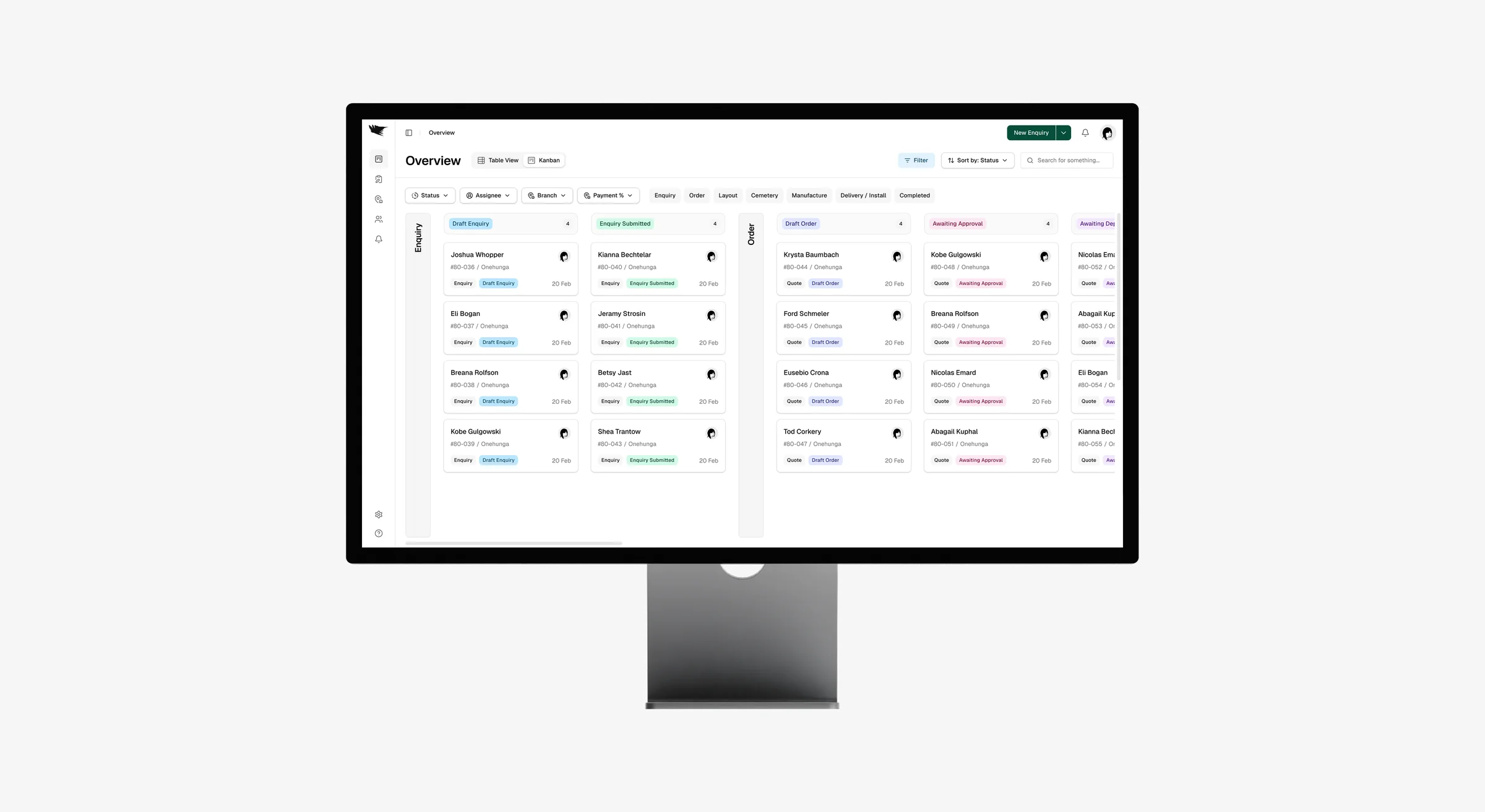
Parkinson & Bouskill makes and installs memorials, a process that previously relied on paper forms and Excel sheets. As a sole designer, I worked closely with the client to build an internal dashboard tracking every job from enquiry to installation, giving each role its own view within one shared system.
Turning paperwork into a shared system.
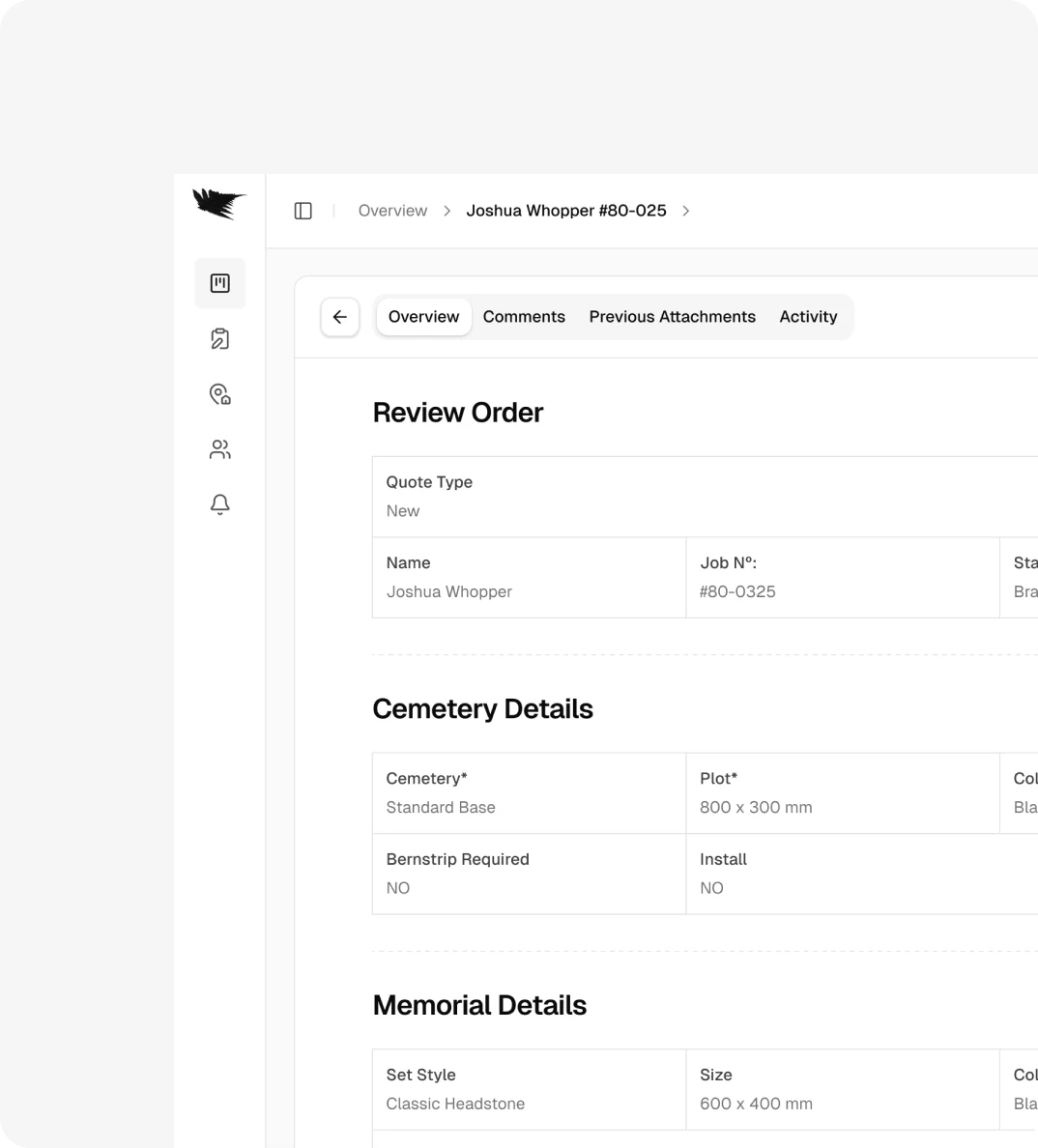
The biggest challenge was organizing a complex, multi-stage workflow into clear, scannable views without burying users in dense data. Across job detail tabs, nested editing and approval modals, calendar schedules, and role-based tables and kanban boards, each stage carries its own statuses, files, and handoffs. Balancing thorough record-keeping with clean layouts and clear next steps required careful structure so roles could move through tasks without getting lost.
Structuring complex workflows for daily execution.
To give teams clear visibility across complex orders, I structured the system around seven workflow stages and colour-coded statuses. I filtered views by role so staff only see information relevant to them; for instance, adding a weekly production board for Factory Managers. Alongside this, I added high-visibility alert boxes to flag urgent blockers like overdue cemetery permits before deadlines slip.
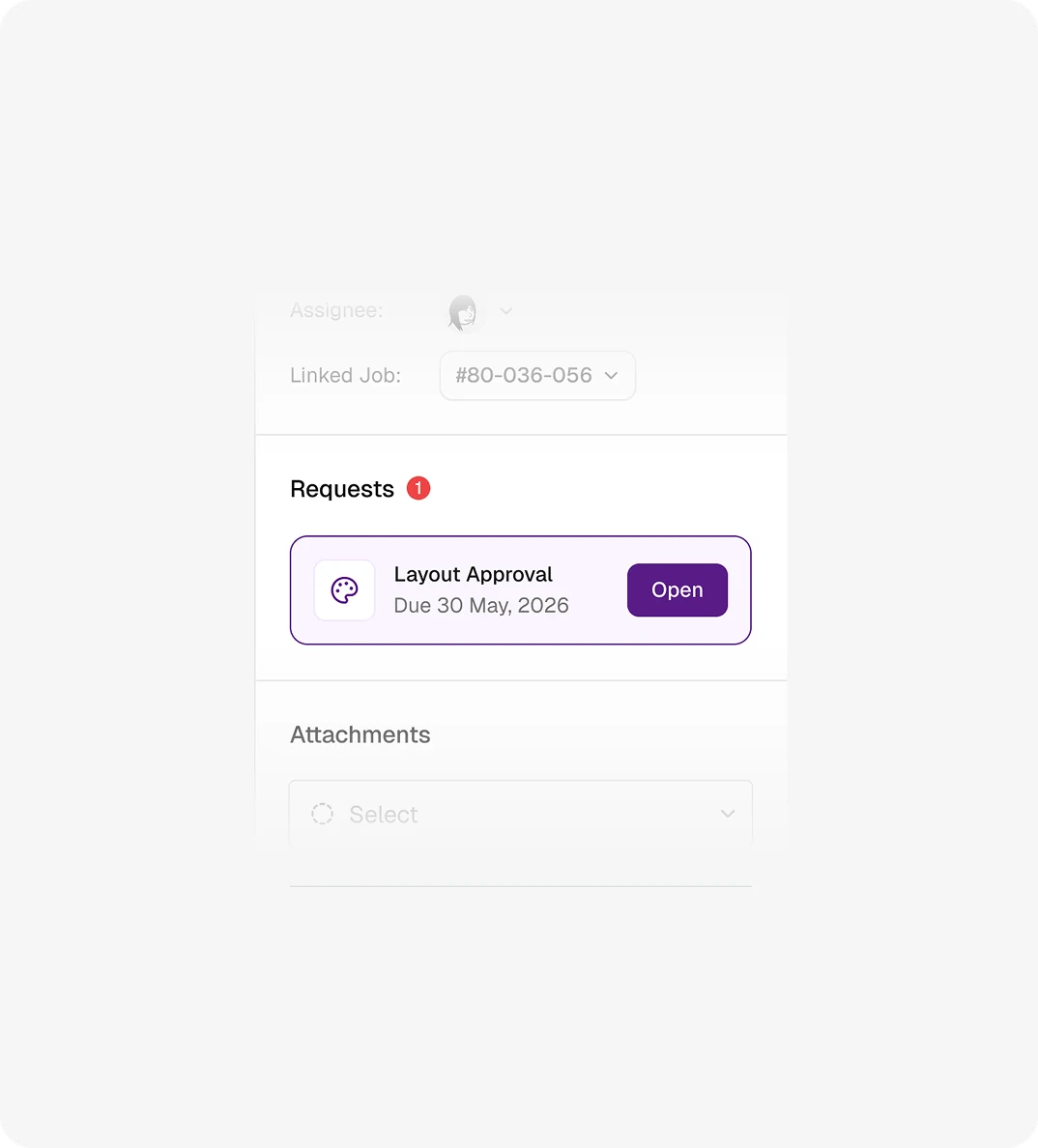
Within each job record, I used stages, tabs, and modals to keep dense details organised, ensuring approvals and edits happen in a dedicated step without crowding the main screen. I also added auto-saved forms to prevent progress being lost mid-task, alongside a Requests section that keeps feedback, confirmations, and next actions in one clear thread. Lastly, I built saved order histories and smart attachments (defaulting to the newest upload while keeping past versions accessible) to prevent file mix-ups and reduce repeat data entry for returning clients.
Less friction, shared clarity.
By replacing fragmented paper records and manual follow-ups with a single role-based system, the platform gave Parkinson & Bouskill clear visibility across every stage of an order. Staffs can now spot overdue jobs, manage approvals and production schedules without digging through loads of paperwork. The resulting prototype established a scalable foundation for daily operations across all roles.